Learn About Psychedelic Science
What Are Psychedelics?
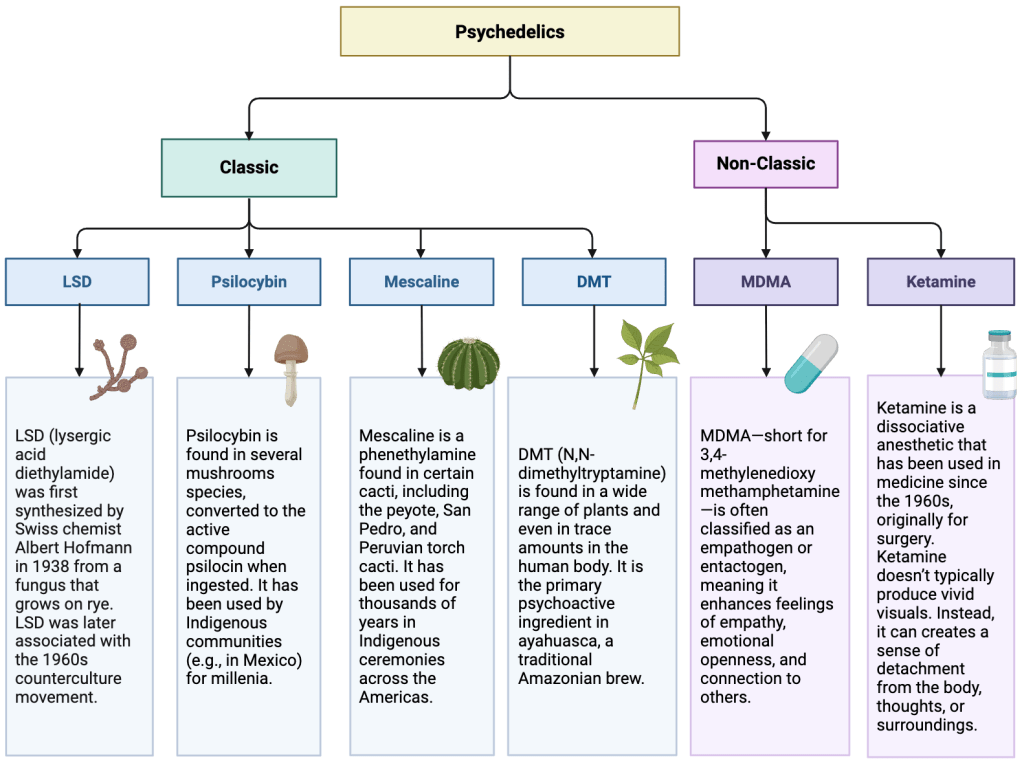
Psychedelics are a group of substances that alter perception, thoughts and emotions. The word “psychedelic” comes from Greek roots meaning mind-manifesting. When used in the right context (i.e., medically supervised), these substances can open the mind to new ways of experiencing the world and ourselves.
Psychedelics are typically grouped into two main categories: 1) classic psychedelics like LSD, psilocybin (a compound in magic mushrooms), DMT (found in ayahuasca), and mescaline (from peyote or San Pedro cacti); and 2) non-classic psychedelics like MDMA (an empathogen) and ketamine (a dissociative anesthetic).
Psychedelics have been used for thousands of years by Indigenous communities for healing, ceremony and connection. These substances also carry unique sociocultural significance being associated with counterculture movements of the mid-twentieth century. More recently, Western medicine is exploring the potential of psychedelics in therapy for conditions like depression, PTSD and addiction.
How Do Psychedelics Work?
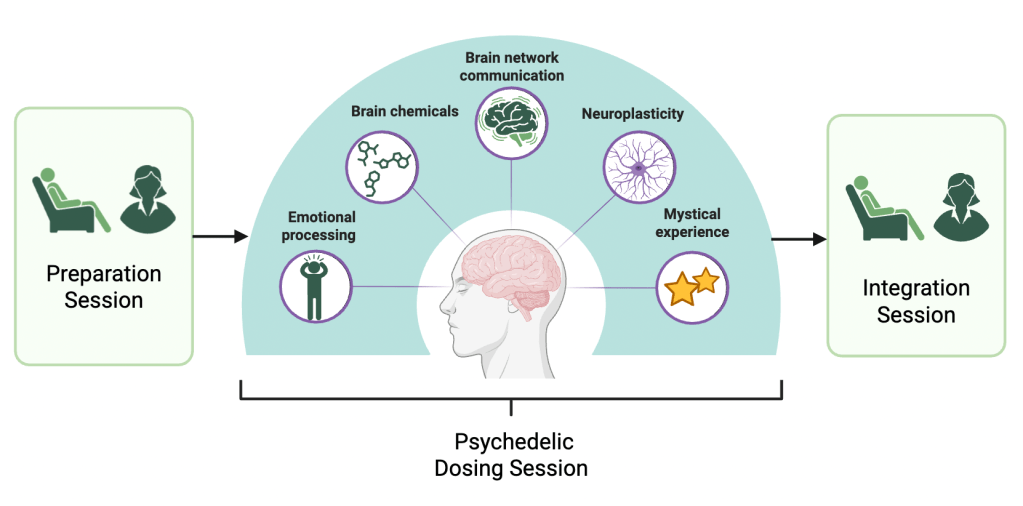
Psychedelics have several effects depending on the specific substance and context.
In general, psychedelics can promote mental well-being by temporarily disrupting rigid patterns of thought and behaviour that often underlie conditions like depression, anxiety and addiction. They do this by changing chemical signals and brain network connectivity—allowing parts of the brain that don’t usually “talk” to each other to communicate.
Psychedelics create a window of heightened neuroplasticity—the brain’s ability to adapt and change. In this state, people may revisit painful memories, gain new perspectives or experience a profound sense of connection.
When used in a medically supervised setting and combined with psychological support, preparation and integration sessions, psychedelics can create deeply meaningful experiences and lead to lasting psychological healing and growth.
Psychedelics are powerful tools—not cures or quick fixes. When used wisely, they can help us better understand the mind, improve mental well-being and reconnect with what makes us human.
To learn more, check out our knowledge translation initiatives below
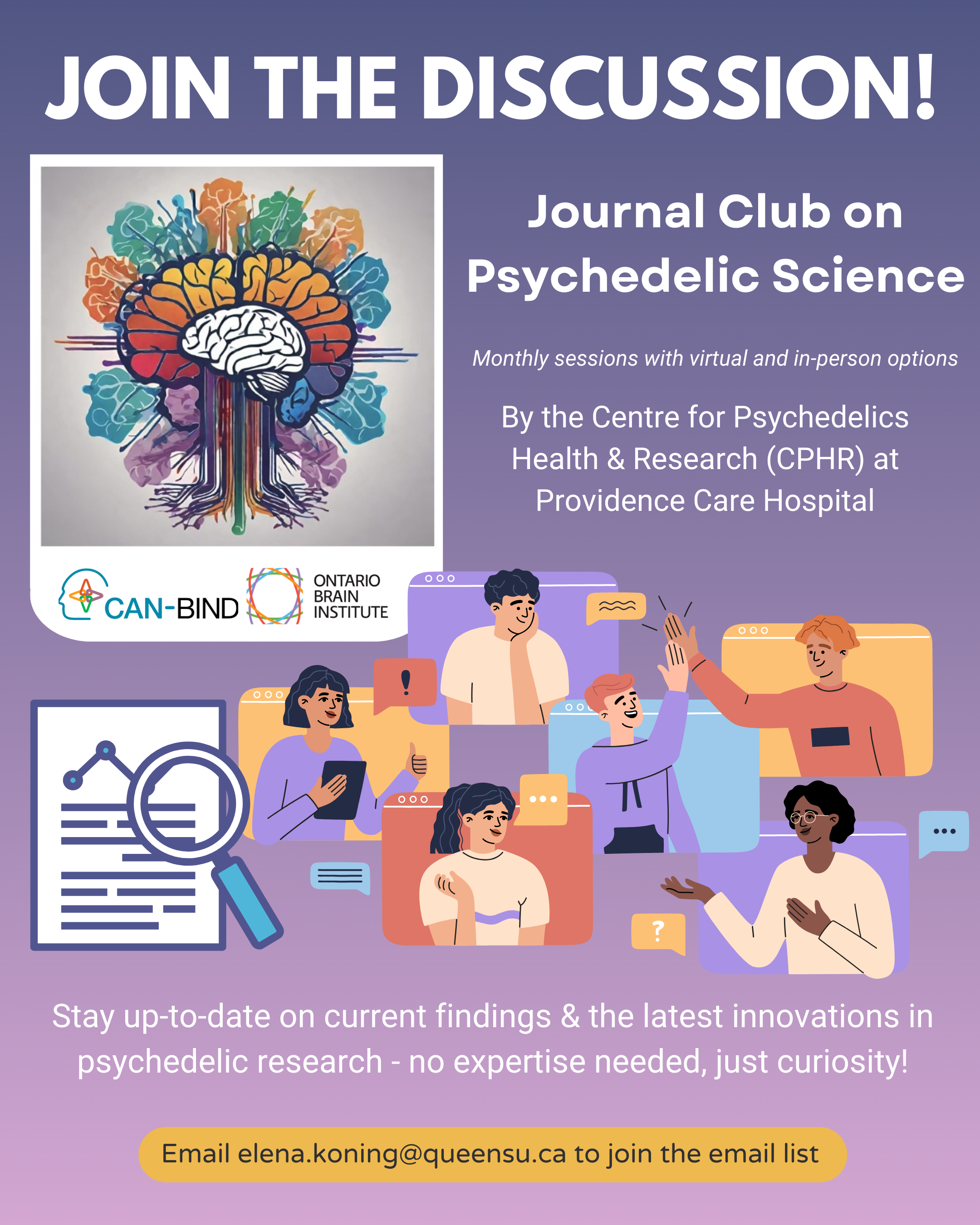
Journal Club on Psychedelic Science
The CPHR Journal Club offers an engaging space for students, faculty members, and researchers to discuss impactful studies, address unique challenges ongoing in the field, and explore innovative solutions. Through our discussions, we aim to gain diverse and multidisciplinary perspectives on the most recent advancements in psychedelic science while fostering connection and collaboration across the field. Sessions are typically one hour in duration and will be held monthly at CPHR, Providence Care Hospital with an option to join virtually. We welcome those interested in the CPHR Journal Club to reach out to Dr. Elena Koning via email at elena.koning@queensu.ca
The Integration Session Podcast
A podcast for exploring the next frontier of psychedelic science: making sense of these curious psychoactive substances with the experts themselves. This podcast takes an integrative approach—exploring the most up-to-date literature, its clinical relevance, and reaching towards solutions to the key challenges in the field today. Hosted by Dr. Elena Koning, this show explores the full spectrum of psychedelic science—from neurobiological mechanisms and study design methodology to ethics, policy, and broader implications. The Integration Session is where psychedelic scientists connect to advance psychedelic medicine in a collaborative, open-science approach. If you’re a scientist, trainee, or simply someone who wants to dig deeper than the psychedelic news headlines, tune in for engaging and rigorous discussions about psychedelics and their promising future in healthcare and beyond.
 Centre for Psychedelics Health & Research